Photo. Kit Miller

Wednesday, 24 July 2019

Woven Patchwork Square.

I wove strips of rusted, tea stained fabric and a cyanotype of leaves to create a patchwork square which measures about 19 cm across. The colour combination reminds me of dark wood and blue and white china, so rich and warm. There's something really relaxing about hand stitching. As with so many creative pieces, the process itself is as important as the end result.
I made a conscious effort to avoid a very neat finish, no straight lines drawn onto the cloth and only a couple of corrections to a misplaced stitch. A tendency to be too pedantic about the final piece means that my work is becoming increasingly tentative, which does not really suit me or what I want to say.
Having woven the strips together I tacked them to a piece of old cotton sheet.  This creates some weight and stability, while adding a third layer, which might be a bit bulky when it comes to joining squares together.
 Back stitch and embroidery thread worked well with the colours and proportions of the squares. The frayed edges create a softer and flatter finish than if the fabric was folded or hemmed. I don't know how well this will wear over time.


Friday, 28 June 2019

Cyanotypes. Before and After


I exposed the fabric for a short while before laying the flowers in place. I'm not sure how much difference it made, but the intention was to have a slightly softer background, not just pure white.
The flowers were sandwiched between the fabric and glass to keep them flat and still.

The sun is bright today but I left them outside for quite a while as I wanted the blue to be quite strong.

Monday, 24 June 2019

Tiny Views

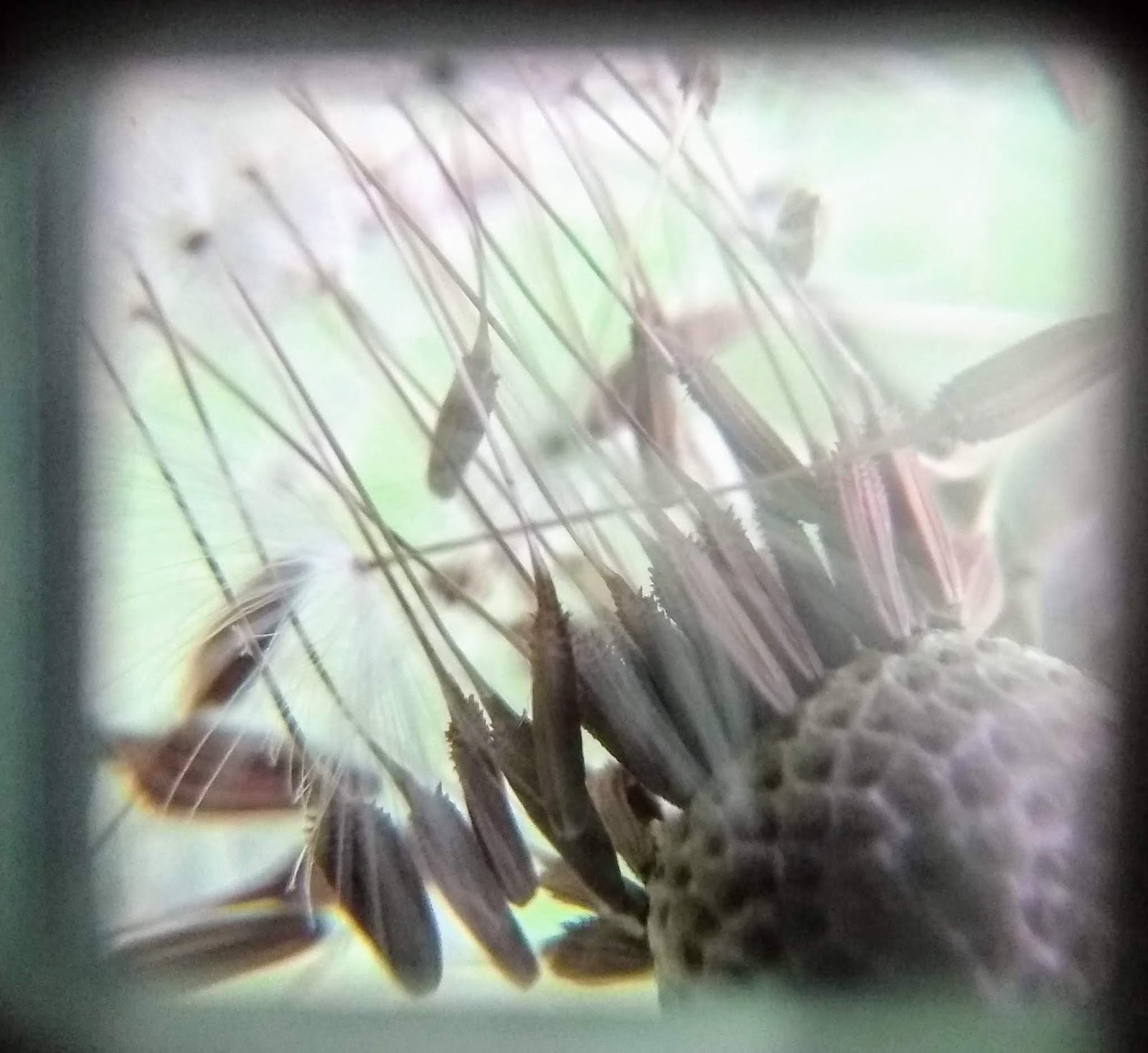
I found what I think is an eye piece from a video camera. It is square with a lens inside. I held it over my phone camera lens and was able to take these close up images. Although my phone shows very fine detail, I liked the effects achieved with this method.
Apart from a little bit of editing such as slightly lighter or sharper on a few of them, the images are in  their original state. The black frame, which has been cropped down, is the edge of the eye piece. Holding the lens in place was a bit tricky though, which is why some of them are slightly crooked. It was such fun that I have taken more than 50 of these photos.


Sunday, 23 June 2019

Cyanotypes on Fabric

New chemicals came in the post and the weather was clear and sunny, so obviously I had to experiment with cyanotypes. I pasted thick solution onto plain fabric and left it in the sun, which lead to a slightly blotchy effect. Carrot leaves under glass made a lovely mask on some pieces.
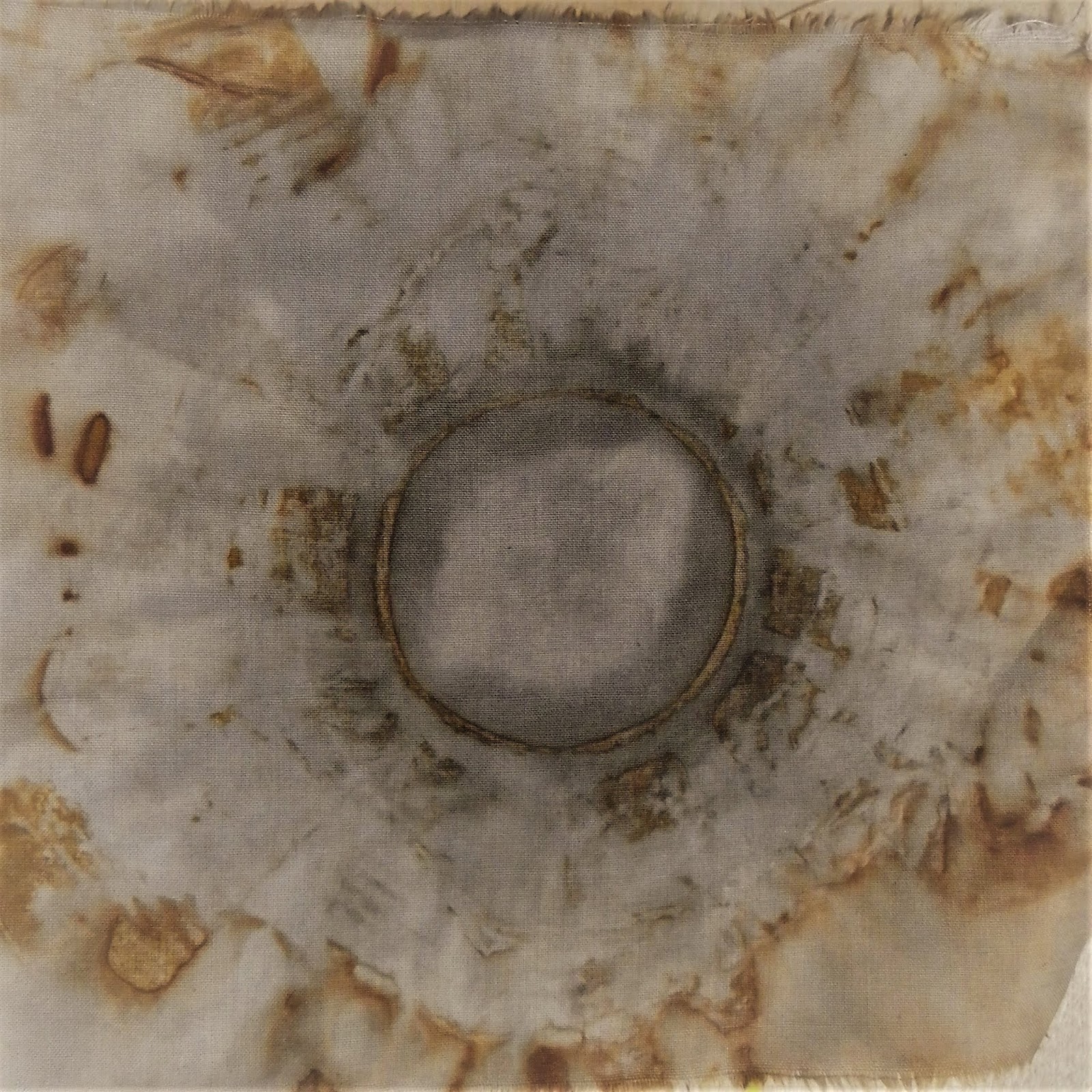
 The thing that I was most keen to try was cyanotype on rusted tea stained fabric. The colour does not always turn out well. Sometimes they just look murky and rather dull, however there were a few samples where the colour was lovely. More practice is needed to get the combinations right.
 I was hoping that some of the pieces would be suitable for making fabric mushrooms and I think  there are a few that will serve that purpose well.

Monday, 10 June 2019

8mm Stills

Here are a few quirky images taken from old 8mm cine films that date from the late 1960s and 70s. My mother attached a clicker to the cine camera which meant that we could take thousands of still images.

.

Some of them are much clearer than this but I have selected a few of the more interesting ones that have changed as a result of age or damage.
I cannot credit anyone as the photographer for any of the images as several family members would use the camera, even the children. In fact I should say especially the children, which made for some particularly interesting snapshots and snippets of film.


We now have a gadget that can capture and save them digitally, which is so much easier than looking at them through a magnifying glass against a bright light. Of course more importantly it means that the photos can be preserved and shared. Looking through the 20 or so rolls of film is quite time consuming but mostly fascinating, although it is always a bit sad when you find badly damaged strips.


Friday, 31 August 2018

Rusty Mushrooms


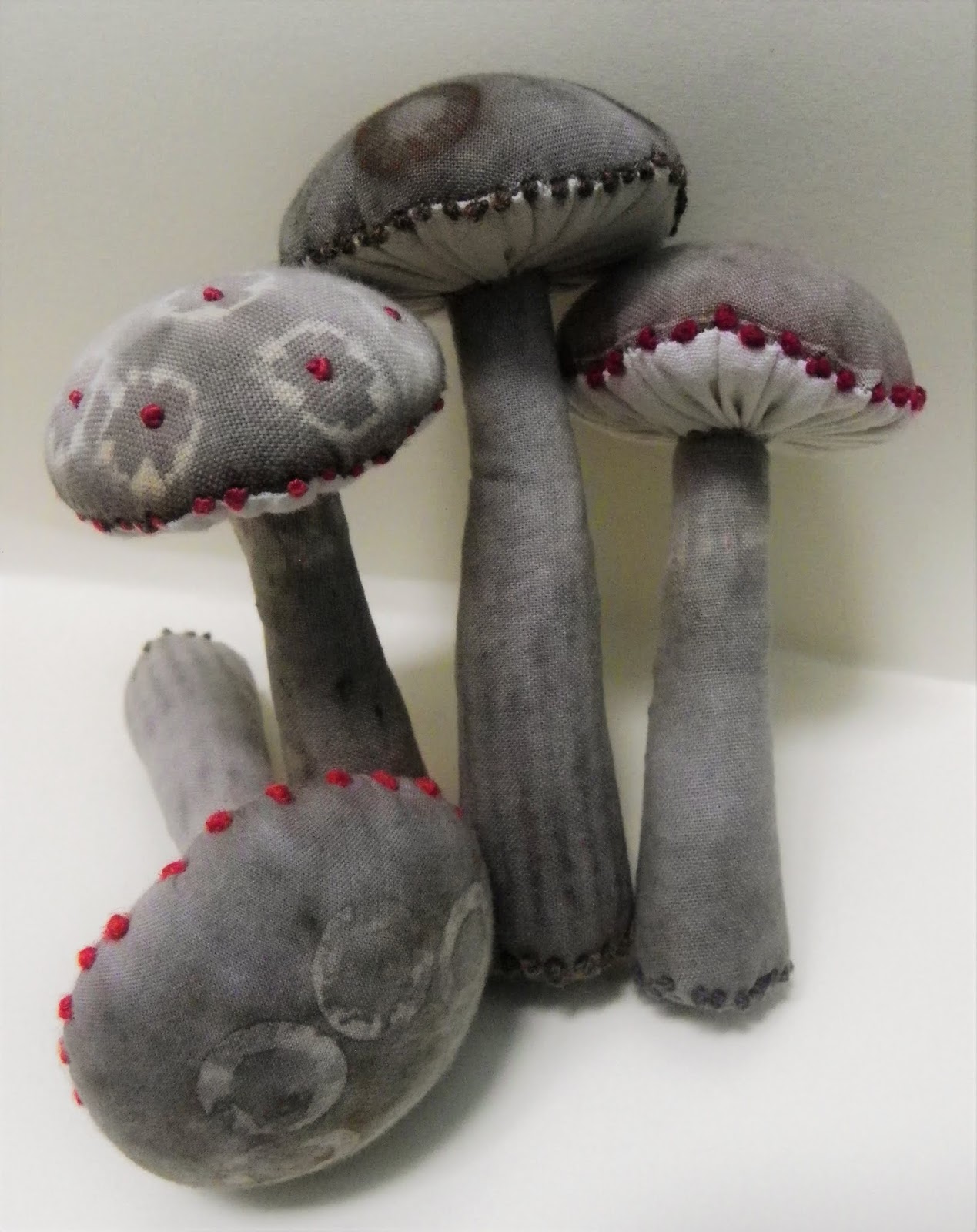
These mushrooms were made from my stash of rusted and tea stained fabric. My original intention was to make samples for sketchbooks leading to some mixed media work. I am now making pieces of fabric with mushrooms in mind. The original samples, and more, can still be used in the sketchbooks, which I'm sure will benefit from all this experimentation (and fun).
They are made entirely from scraps and materials from charity shops and our local scrap store (sadly now closed). So far I have only used fabric which is over dyed with tea. I prefer the grey and black colours to the plain rust. I find that different brands of tea produce different shades. One of the makes that I used was far too pink, so I have settled on this one which will turn the rust black if the tea is very strong or the rusted fabric is left in soak for long enough.
Quite a few more will be needed if I am to sell them at local craft fairs this winter. I didn't have a theme in mind, but I think that these particular ones would be well suited to Halloween. It would be a good idea to try some other styles with Solstice and Christmas in mind.


Saturday, 4 August 2018

Rust and Tea

I'm having great fun at the moment experimenting with rust and tea on fabric.
I love the way that the rust turns black when soaked in strong tea.
The other side of this was once painted with acrylic paint. It has led to an interesting blotchy effect on this side as the raw fabric absorbs the rust and tea more effectively.
When the fabric is tied around  beads or pleated with pegs etc. then dipped in tea, it produces interesting patterns and textures.


 This is an impression made from an old fire hood.
Impressions made from nails and a rusty spring.

Having washed the fabric I place it in a mixture of half water and half vinegar. I also spray the iron with the same liquid. The impression made differs according to whether the fabric is pressed onto the iron or if the object is laid on the cloth. It seems to depend on how much air, therefore oxygen, reaches the point of contact.
If the process is taking a long time, or when the weather is very dry, it is necessary to keep spraying the fabric until the rust has taken full effect. I must admit that as time goes on I get more haphazard and start to worry less about measuring quantities, so the effects might be partly due to the levels of water or vinegar.
Now I need to start thinking about what to do with my growing stash of rusted fabric.